Almax Auto
Almax Auto
Almax Auto
Engineered for dense urban environments, sharp topography, and coastal transit conditions.
Industrial Report on Topography, Import Logistics, and Supply Chain Alignment.
Urban Grade Ability
Turning Radius Ideal
Anticorrosive Rating
China to Busan Transit
Busan, South Korea's primary port metropolis, presents a highly unique landscape for urban vehicle deployment. Unlike traditional flatter cities, Busan is characterized by narrow hillside roads (known locally as Sanbok-doro), high-elevation residential zones, coastal atmospheric moisture with elevated salinity levels, and highly congested waterfront highways.
For urban commuters, transit operators, and car rental agencies in Busan, a vehicle must meet strict operational requirements:
China's automotive manufacturing hubs (predominantly in Guangzhou, Wuhu, and Shanghai) have revolutionized the compact vehicle and EV supply chain. Through massive scaling, localized battery integration (LFP/NCM chemistry), and integrated ADAS (Advanced Driver Assistance Systems) development, Chinese factories offer an unparalleled cost-to-performance ratio.
For global importers buying for the Busan market, this means accessing models with extended warranties, high range performance (over 400-500km CLTC), and structural integrity optimized for the dense urban layouts of coastal East Asia at wholesale prices that domestic Korean or European equivalents cannot match.
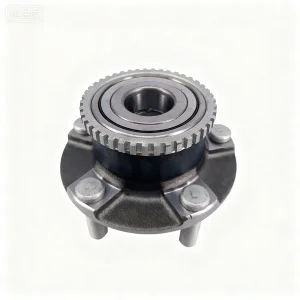
Vehicles operating in Busan must resist structural degradation from the coastal air. Leading Chinese factories supplying this market implement enhanced cathodic electrophoretic coating (E-Coat) processes, comprehensive undercarriage PVC coatings, and precision rust-resistant components (such as specialized anti-rust ball bearing assemblies). This prevents premature oxidation of drivetrain and suspension systems, preserving resale value and vehicle safety in coastal environments.
Almax Auto connects global buyers with high-performance Chinese automotive production lines.
Almax Auto is a comprehensive automotive export service company dedicated to promoting Chinese automobiles to the global market. For many years, we have focused on new and used car exports, leveraging China's strong automotive manufacturing and supply chain advantages to provide global clients with efficient, safe, and transparent one-stop automotive export solutions.
By focusing heavily on quality control, localized market customization (including right-hand/left-hand drive configurations, specific telematics localized for South Korean and East Asian navigation, and anti-corrosion chassis treatments), we ensure every exported hatchback performs optimally in demanding urban locations like Busan.
Our headquarters are located in China, with automotive export bases in Wuhu and Guangzhou, covering the entire process from vehicle procurement, inspection, preparation, customs clearance, and logistics. Simultaneously, we have established offline stores and service centers in Cambodia, Algeria, and Rwanda, providing overseas clients with vehicle display, sales, and after-sales support, truly realizing our strategic layout of "from Made in China to Global Service."
For our Korean partners, our proximity to Shanghai, Wuhu, and Guangzhou ports guarantees rapid maritime roll-on/roll-off (Ro-Ro) or containerized shipping paths straight to Busan Port, reducing lead times to mere days.


We deeply understand that every vehicle represents trust. Based on a professional team, strict quality control, and international trade experience, Almax Auto provides clients with a one-stop export service from vehicle selection, inspection, customs clearance to delivery, making it easier for overseas partners to purchase and sell Chinese automobiles.
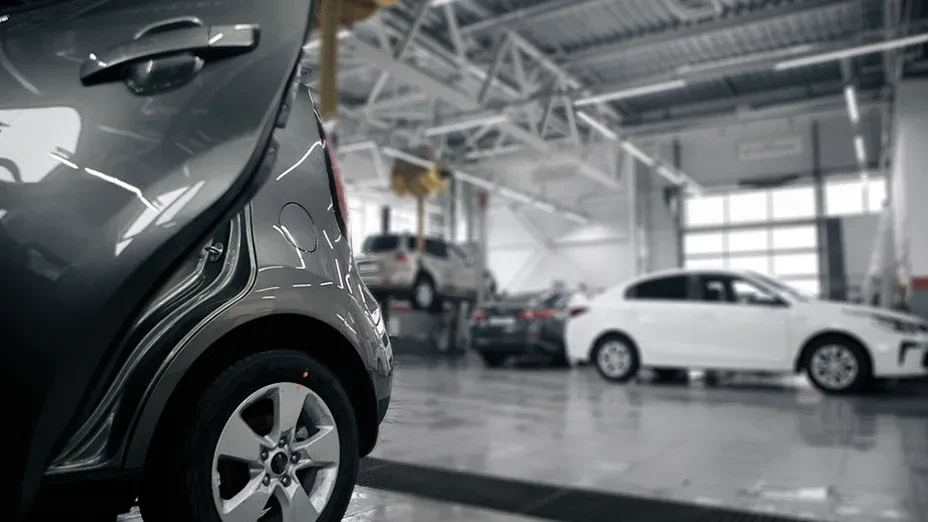
Our inspection process includes an exhaustive 120-point digital check, state-of-health (SoH) diagnostics for EV battery packs, road trials, and complete cosmetic preparation before shipping.
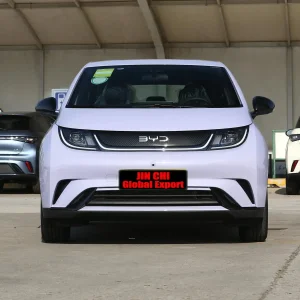
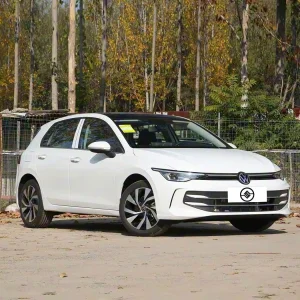
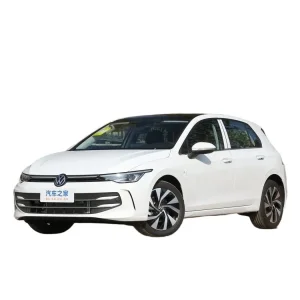
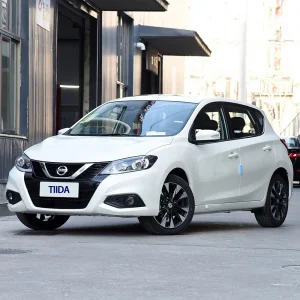
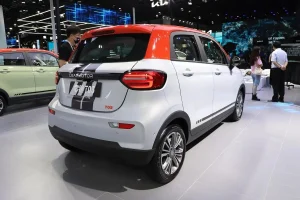
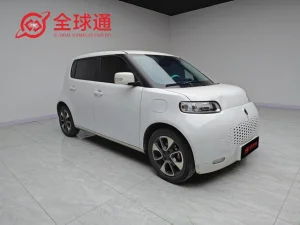
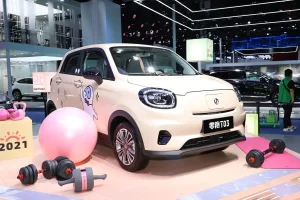
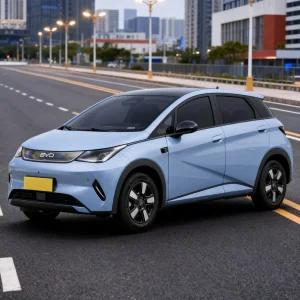
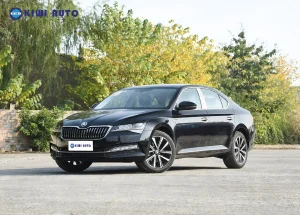
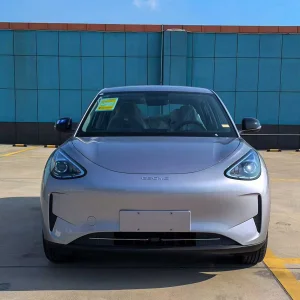
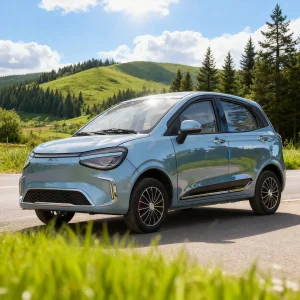
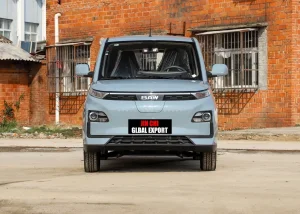
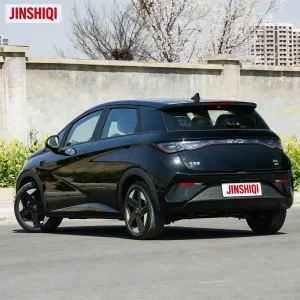
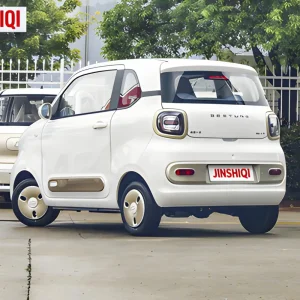
A diverse selection of high-mileage EV drivetrains and female-friendly city commuter hatchbacks.
Our structured pathway ensures smooth import transactions from contract signing to final customs clearance at the Port of Busan.
We will continue to expand our overseas market network, promoting more high-quality Chinese brands and models to enter the international market, becoming a bridge connecting the Chinese automotive industry with global consumers.
Every urban hatchback undergoes electrical subsystem checks, structural checks, and anti-corrosion verification before preparation for custom export declarations.
Coordinating direct roll-on/roll-off (Ro-Ro) or containerized ocean freight to Busan Port, including full documentation matching South Korea's import rules.
Featuring verified new energy platforms and specialty components designed to withstand coastal weather conditions.
Operational guidelines for fleet operators, distributors, and logistics channels importing via Busan Port.
Importing cars into South Korea involves navigating strict safety and environmental standards. The Regional Comprehensive Economic Partnership (RCEP) and the China-Korea Free Trade Agreement (FTA) provide beneficial tariff frameworks for regional trade, but vehicles must satisfy specific criteria:
All passenger vehicles, especially New Energy Vehicles (NEVs), must comply with the Korea Transportation Safety Authority (TSAT) standards. This includes battery crash safety assessments, electromagnetic compatibility (EMC) parameters, and thermal runaway prevention compliance. Almax Auto ensures that all battery systems exported to South Korea align with domestic battery safety reporting requirements.
Leveraging our strategic transit hubs in Guangzhou and Wuhu, we arrange direct shipping paths to Busan Port (including Gamman, Shinsundae, and Newport terminals). The short maritime distance between Chinese export ports and Busan means shipping transit times are minimal, typically ranging from 3 to 5 business days, drastically lowering inventory holding costs for importers.
Modern South Korean consumers expect robust software systems. We coordinate with factory engineers to ensure navigation, ADAS alerts, and connected software platforms (such as parking assist and pedestrian warnings) are compatible with Korean cellular bands and mapping APIs.
Expert answers to common technical, logistics, and compliance questions from auto dealers and B2B buyers.
Partner with Almax Auto for direct factory-level pricing, customized vehicle specifications, and fast logistics processing.