Choosing among the Best Compact Cars For City Driving requires more than admiring a small footprint. Urban streets punish poor visibility, wide turning circles, and weak low-speed control. A car that fits neatly beside a curb can still feel stressful in a crowded junction.
INRIX’s 2023 Global Traffic Scorecard reported that American drivers lost an average of 42 hours in congestion, costing about $733 per driver. Those minutes make maneuverability important. A compact car can slip through narrow lanes, use smaller parking spaces, and reduce the pressure of repeated stop-and-go journeys. Donald Shoup, a leading parking and urban-mobility researcher, famously observed, “Cruising for parking is a form of traffic congestion.” His point remains practical: parking design affects driving efficiency.
This guide will assess compact cars through measurable, everyday criteria. These include exterior width, turning radius, outward visibility, fuel economy, braking performance, rear-seat usability, and safety-test results. EPA fuel-economy data and IIHS crash evaluations provide useful reference points, while long-term ownership reports reveal less obvious costs. A quiet cabin also matters when traffic becomes exhausting.
Still, smaller is not automatically better. Compact cars may offer less cargo room, thinner seat cushioning, and limited rear passenger space. Some inexpensive models also compromise on sound insulation. That deserves honest attention. City driving is not only about squeezing into a parking bay; it is about arriving alert, protected, and comfortable. The strongest choices balance agility with safety, reliability, and realistic daily usability.
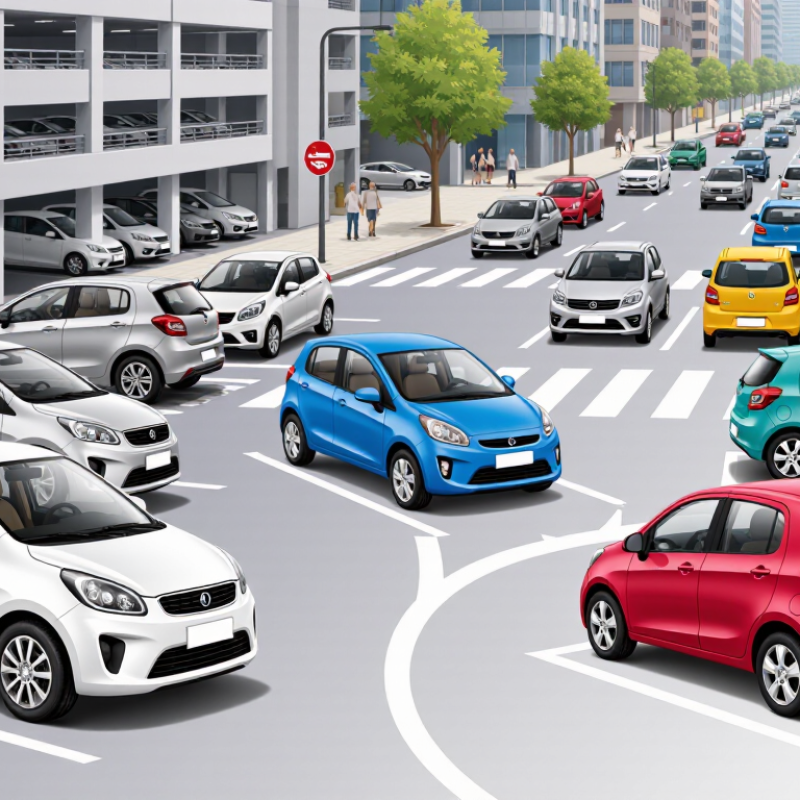
Defining Compact Cars for Urban Use
A compact car for urban use is not simply a small vehicle. It is a practical balance between exterior size, cabin space, visibility, and daily control. In many markets, compact cars measure roughly 3.8 to 4.5 meters long, but local classifications vary. Width often matters more than length on crowded streets. A narrow body can pass parked vehicles with less stress.
From regular city driving, I notice the turning radius first. A tight turning circle makes cramped intersections and underground parking easier to manage. Good all-round visibility also helps when cyclists, pedestrians, or delivery vehicles appear suddenly. A compact car should provide enough rear-seat room for short trips and a usable cargo area for groceries. It does not need to carry everything.
Urban comfort depends on details. Firm suspension can feel controlled on smooth roads, yet unpleasant over broken pavement. Small wheels may improve ride comfort, although they can reduce the vehicle’s visual appeal. That trade-off is easy to overlook. Fuel efficiency is useful in stop-and-go traffic, but driving habits and traffic conditions still matter greatly. Safety equipment, braking performance, and stable handling should define a compact car more than its parking convenience.
The definition remains imperfect. A very short car may save space but feel cramped during longer journeys. A slightly larger compact vehicle may serve families better while remaining manageable downtown. Test the seating position, door opening, mirror visibility, and trunk access near real city streets. Specifications help, but lived experience reveals the compromises.
Why Are Compact Cars Best for City Driving?
Compact cars typically have a shorter body, narrower width, and smaller turning circle than larger passenger cars. These characteristics make them easier to park, maneuver through narrow streets, and handle in dense urban traffic. Values shown are representative midpoint specifications for each vehicle size class and may vary by model.
How Smaller Dimensions Improve Maneuverability
Compact cars suit city driving because their smaller dimensions create more usable space around the driver. A shorter body can fit into narrow parking spaces with less adjustment. A tighter turning circle also helps when streets bend sharply between parked vehicles.
In a practical parking exercise, a small car may complete a three-point turn with fewer movements. Its shorter front and rear ends make corners easier to judge. Drivers can see nearby curbs more clearly from a closer seating position. This matters beside delivery vans, bicycles, and crowded sidewalks. Less body width also leaves more room when two vehicles pass on a narrow road.
Small cars are not automatically easy to drive.
A very short wheelbase can make the ride feel less settled over rough pavement. Compact cabins may also reduce storage and passenger comfort. I noticed this during a tight garage test: the car entered quickly, but the mirrors still demanded careful attention. Dimensions improve maneuverability, yet visibility, steering response, and driver habits remain important. Even an experienced driver can misjudge a corner when rain hides painted lines. That small mistake is worth remembering.
Why Compact Cars Are Easier to Park
Why Are Compact Cars Best for City Driving?
In city driving, parking is often the hardest part, not the traffic itself. A compact car leaves more visible space around its corners. That makes narrow garages, crowded curb lanes, and older parking structures less stressful. The EPA’s 2023 Automotive Trends Report found that the average new vehicle footprint reached about 49.5 square feet in model year 2022. Larger footprints consume more of the available parking envelope. A smaller body can therefore create a useful margin.
Parking geometry explains the difference. NACTO’s Urban Street Design Guide generally allows about eight feet for a curbside parking lane. A shorter car needs less road length for parallel parking. It also reduces the chance of blocking a bicycle lane or moving traffic during the maneuver. In my experience, the rear corners matter most. Clear sightlines make a tight turn feel predictable. Small errors are easier to correct.
The International Energy Agency’s Global Fuel Economy Initiative reports that heavier vehicles usually require more energy to move. That finding is not a parking statistic, but it supports the compact-car advantage in dense areas. Still, size alone does not guarantee easy parking. Turning radius, camera quality, seat height, and steering response can matter more than a few inches. I have found some compact cars surprisingly awkward in narrow ramps. The “smallest” choice is not always the easiest one.
Why Are Compact Cars Best for City Driving? - Why Compact Cars Are Easier to Park
| Vehicle category |
Typical length |
Typical width
(mirrors folded) |
Typical turning circle |
Approximate parallel-parking gap
with 0.8 m clearance |
City-driving advantage |
| Compact hatchback |
3.8–4.3 m |
1.68–1.80 m |
9.5–10.8 m |
4.6–5.1 m |
The shortest body and tight turning circle make narrow streets and small parking spaces easier to manage. |
| Small sedan |
4.2–4.5 m |
1.70–1.80 m |
10.0–11.0 m |
5.0–5.3 m |
Still easy to position in urban spaces while offering a separate trunk and stable highway manners. |
| Midsize sedan |
4.6–4.9 m |
1.78–1.85 m |
11.0–12.0 m |
5.4–5.7 m |
Requires more space to turn and park, especially on older streets with short curbside gaps. |
| Large SUV |
4.8–5.2 m |
1.90–2.00 m |
11.5–13.0 m |
5.6–6.0 m |
The greater length and width can reduce clearance near parked vehicles, walls, cyclists, and narrow ramps. |
How to read the figures:
The dimensions are representative ranges for commonly sold vehicles in each category. Turning circle means the approximate diameter of the smallest circle the vehicle can complete. The parallel-parking estimate uses vehicle length plus approximately 0.8 m of maneuvering clearance; actual requirements vary with steering angle, driver skill, curb design, and local parking rules.
Fuel Efficiency and Everyday City Costs
Why Are Compact Cars Best for City Driving?
Fuel Efficiency and Everyday City Costs
Compact cars can reduce the daily cost of urban travel in several practical ways. Their smaller engines often use less fuel during short commutes and repeated stop-and-go traffic. A typical 12-mile city trip may include traffic lights, tight turns, and slow queues. Lower fuel consumption becomes noticeable after several weeks.
Parking also costs less effort and sometimes less money. A compact car can fit into narrow spaces near apartments, offices, and busy markets. Smaller tires usually cost less to replace, while lighter body panels may reduce some repair expenses. However, fuel figures from official tests may differ from real driving. Heavy traffic, air conditioning, and frequent acceleration can quickly change the result. I still sometimes choose a larger vehicle for comfort, and that choice weakens the savings.
Tips
Track fuel use for one month, not one weekend. Keep tires properly inflated, remove unnecessary cargo, and accelerate gently. Compare parking fees before choosing a route. Maintenance records matter, too. A neglected compact car can become expensive despite its efficient design. My own habit needs improvement: I often delay checking tire pressure, then wonder why consumption rises.
Practical Limitations of Compact Cars in Cities
Compact cars slip into narrow parking spaces, but their small footprint brings real trade-offs. A folded stroller, grocery bags, and two adults can quickly crowd the cabin. Rear-seat legroom and luggage space vary, so check the exact car with your usual passengers and gear. That matters on airport runs and rainy school pickups, not just weekend trips.
Rough streets can be another weakness. AAA’s 2023 pothole survey estimated that 44 million U.S. drivers had suffered pothole-related vehicle damage over five years, with average repairs costing $406. A low-slung compact may scrape on broken pavement or steep driveways; tire and clearance details matter. Crash protection deserves equal attention. IIHS vehicle-size research finds that people in lighter vehicles face greater risk in crashes involving heavier vehicles. The trade-off is not abstract. NHTSA recorded 7,522 pedestrian deaths in 2022, and 83% occurred in urban areas, where cars, people, and cyclists share crowded streets. A compact car is easier to place, but small dimensions alone do not guarantee good sightlines or safer outcomes. Test visibility at corners, rear-seat comfort, and the ride over rough blocks. I would not assume “city-sized” means suitable for every city.
Conclusion
Compact cars are designed to meet the practical demands of urban driving, combining small exterior dimensions with enough interior space for everyday travel. Their shorter length and narrower body make it easier to move through crowded streets, handle tight turns, and respond to changing traffic conditions. These qualities are especially valuable in areas with narrow lanes, frequent intersections, and limited road space. For drivers searching for the Best Compact Cars For City Driving, maneuverability and visibility are often more important than maximum size or power.
Another major advantage is easier parking. Compact cars can fit into smaller spaces, reducing the time and stress involved in finding a suitable spot. Their efficient engines can also lower fuel use and daily transportation costs, particularly during frequent stop-and-go trips. However, smaller vehicles may offer less cargo room, rear-seat space, and comfort for long journeys. Even so, for individuals and families who mainly travel within busy urban areas, compact cars provide a practical balance of convenience, efficiency, and affordability.
 Almax Auto
