 Almax Auto
Almax Auto
Almax Auto
Choosing among China’s best new vehicles requires more than comparing price, range, or screen size. How To Test Drive New Vehicles begins with a practical question: will this vehicle work during an ordinary Tuesday? Industry research supports that approach. Deloitte’s 2024 Global Automotive Consumer Study shows that Chinese buyers increasingly weigh connectivity, electric range, charging convenience, and advanced driver assistance. These features may look impressive in a showroom. Their daily performance can feel different.
J.D. Power’s 2024 China Initial Quality Study also highlights the importance of evaluating technology after real use, especially infotainment, controls, and driver-assistance functions. Test them carefully. Pair your phone, adjust the seat, and operate the air conditioning without staring at the display. Listen for wind noise on a rough urban road. Check rear visibility beside a parked vehicle. Try the brakes gently, then firmly, where conditions allow. Notice whether the accelerator feels smooth in traffic.
Jake Fisher, former senior director of automotive testing at Consumer Reports, has said, “You should never buy a car without taking it for a test drive.” That advice remains simple and valuable. A ten-minute dealership loop is not enough. Ask for a longer route, including narrow streets, a highway section, and a parking maneuver. Bring the people who will actually ride in the vehicle. Their comments may reveal uncomfortable seats or difficult door access.
No test drive is perfect. Weather, traffic, and a salesperson can influence impressions. I might still miss something. Record observations immediately, then compare them with the manufacturer’s specifications, independent reviews, and official safety data before deciding.
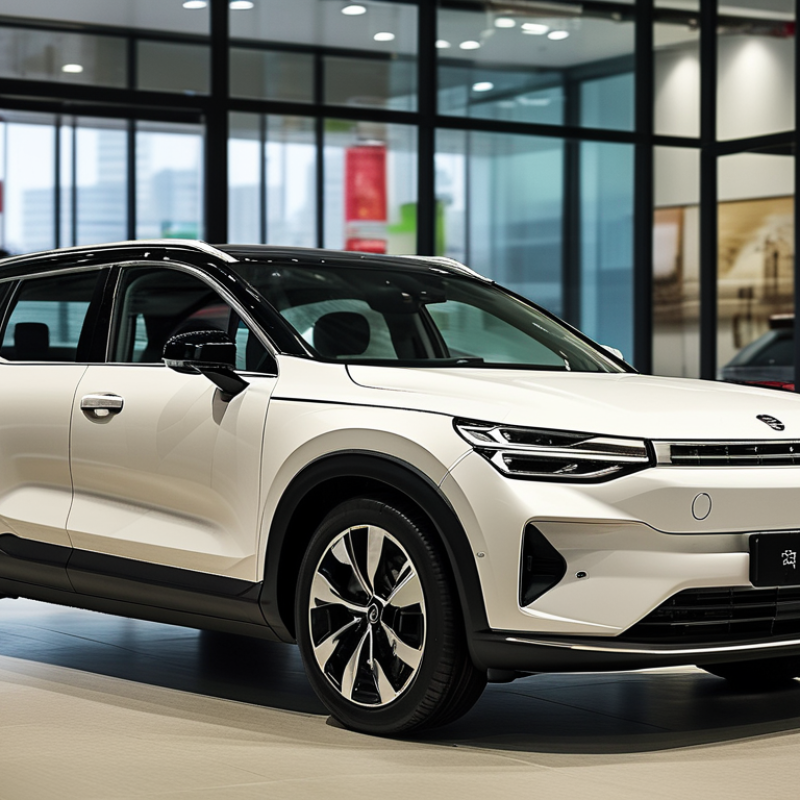
How To Test Drive China Best New Vehicles?
China’s new-energy vehicle market has moved beyond a niche experiment. The China Association of Automobile Manufacturers reported 12.87 million new-energy vehicle sales in 2024, representing 40.9% of total vehicle sales. That figure includes battery-electric, plug-in hybrid, and fuel-cell vehicles. Numbers need context. The International Energy Agency’s Global EV Outlook 2025 also recorded strong Chinese electric-car growth, supported by wider charging access and falling battery costs. These reports suggest that a test drive should compare real usability, not only acceleration figures.
Start with the daily route. Drive through a narrow parking area, uneven pavement, and a busy intersection. Check steering weight, brake smoothness, visibility, and rear-seat comfort. Then test cabin cooling after the vehicle sits in sunlight. Ask for the usable battery capacity, charging time, warranty terms, and winter-range evidence. A display showing impressive range is not proof of ordinary performance.
Try the charging process yourself. Note connector handling, payment steps, and whether the cable reaches the port comfortably. Evaluate driver-assistance functions only on suitable roads and within local rules. They can reduce fatigue, but they do not replace attention. I once focused too much on screen size and missed an awkward blind spot. That was a poor judgment. A quiet cabin can also hide tire noise at higher speeds, so include a longer road section. A careful test drive turns CAAM’s impressive 40.9% market share into practical buying evidence.
A brand-neutral test-drive framework based on China's 2024 new-energy vehicle market scale and the practical needs of different vehicle categories.
| Vehicle Category | Typical Powertrain | Best Use Case | What to Test Drive | Key Measurements to Record | Recommended Buyer Profile | Priority |
|---|---|---|---|---|---|---|
| Compact Electric Hatchback or Sedan | Battery-electric drive with one motor | Urban commuting, short trips and daily parking in tight spaces | Low-speed smoothness, steering weight, visibility, regenerative braking and one-pedal control | Turning radius, seat comfort, rear-seat space, energy use during the route and charging-port access | City drivers seeking low running costs and easy maneuverability | High |
| Mid-Size Electric Sedan | Single- or dual-motor battery-electric drive | Mixed urban and highway driving with an emphasis on efficiency | High-speed stability, lane-change behavior, wind noise, braking confidence and ride comfort | Highway energy consumption, cabin noise, rear legroom, boot capacity and driver-assistance usability | Commuters and families requiring long-distance comfort | High |
| Electric Crossover or SUV | Battery-electric drive with front- or all-wheel drive | Family travel, higher seating position and flexible cargo use | Ride quality over uneven roads, body control, parking-camera clarity, step-in height and cargo loading | Ground clearance, cargo volume, rear-seat folding usability, turning circle and highway range consistency | Families needing space without tailpipe emissions | High |
| Plug-In Hybrid Sedan | Electric motor combined with an internal-combustion engine | Electric commuting with fuel backup for longer journeys | Engine start quality, transition between electric and hybrid modes, brake-pedal feel and power delivery | Usable electric range, charging time, fuel consumption after battery depletion and trunk space | Drivers with mixed charging access and frequent intercity travel | High |
| Plug-In Hybrid SUV | Hybrid system with external charging and optional all-wheel drive | Family touring, varied road conditions and extended-distance travel | Low-speed electric response, engine refinement, uphill acceleration, suspension comfort and towing stability | Electric range, combined fuel economy, cargo capacity with the battery installed and charging convenience | Households wanting SUV practicality with reduced fuel use | High |
| Extended-Range Electric SUV | Electric drive supplied by a battery and a fuel-powered range extender | Electric-first daily driving with fewer concerns on long trips | Electric driving refinement, generator noise under load, acceleration consistency and thermal comfort | Battery-only range, fuel use during long trips, charging time and available luggage space | Buyers who prefer electric driving but need long-trip flexibility | Medium |
| Large Electric MPV or Three-Row SUV | Battery-electric or plug-in hybrid system | Large families, passenger transport and long-distance comfort | Third-row access, second-row adjustment, ride comfort, visibility, climate control and luggage flexibility | Usable seating capacity, cargo volume with all rows occupied, charging performance and turning circle | Large households prioritizing passenger space and comfort | Medium |
| Performance-Oriented NEV | High-output battery-electric or plug-in hybrid drive | Drivers prioritizing acceleration, handling and advanced chassis control | Throttle response, braking from speed, cornering balance, tire grip and stability-control calibration | Repeated acceleration consistency, brake fade, ride firmness, tire noise and real-world energy use | Enthusiasts willing to trade efficiency or comfort for performance | Medium |
Check the latest safety score for the exact vehicle version. Confirm the test date, equipment level, tire specification, and software version. Scores can age quickly.
Test collision warnings, emergency braking, lane centering, blind-spot alerts, and adaptive cruise control. Use a marked, legal road. Never provoke a system.
Look for smooth warnings and gentle steering corrections. Late alerts and sudden interventions deserve attention. Read the dashboard wording. Can you understand it instantly?
Use a repeatable route with city streets, rough pavement, bends, and safe braking space. Drive similar sections twice at similar speeds. Keep climate settings consistent. My first impression may be wrong.
Notice steering delay, body roll, lane stability, and recovery after corrections. Repeat controlled braking three times on dry pavement. Pedal consistency matters more than one short stop. Keep plenty of distance.
Check seat pressure, suspension rebound, head movement, floor vibration, and rattles. A calibrated sound meter gives better evidence than a phone application. Road texture can distort results. Record the conditions.
Request the complete price, including registration, delivery, insurance, and home charging equipment. Read battery, motor, charger, and electronics warranty limits. Confirm service requirements and repair locations. Get everything in writing.
Request a battery health report and recent fault-code information. Watch for sudden battery percentage drops during steady acceleration. Inspect the GB/T 20234 inlet in daylight. Test connection, locking, charging speed, and dashboard messages.
Do not judge only acceleration or screen quality. A cable may fit but fail communication. Leave charging active for several minutes, then record power and battery gain. A second inspection after cooling is wiser.
How To Test Drive New Vehicles begins with choosing candidates based on objective market data, such as China’s 2024 new energy vehicle sales of 12.87 million units, representing 40.9% of total vehicle sales. Before driving, review each model’s C-NCAP 2024 safety results, driver-assistance functions, and available safety features. Then compare the official MIIT CLTC range with independent real-world energy-consumption figures and direct-current charging performance to understand everyday usability.
Use the same standard route for every vehicle, covering city streets, faster roads, turns, uneven surfaces, and parking conditions. Evaluate steering response, ride comfort, cabin noise, acceleration, and braking consistency rather than relying on first impressions. Finally, assess the total ownership value, including purchase price, warranty coverage, battery-health information, service support, and compatibility with GB/T 20234 charging equipment. This structured approach makes test-drive impressions more consistent and helps buyers select a vehicle that fits both practical needs and long-term expectations.
