Almax Auto
China’s autonomous driving sector has moved from laboratory trials toward supervised vehicles, robotaxis, logistics fleets, and advanced driver assistance systems. This growth reflects major Advancements In Autonomous Driving Tech across perception, mapping, computing, vehicle control, and safety validation. Chinese suppliers now serve different layers of the technology stack. Some develop complete driving platforms, while others provide sensors, chips, simulation tools, or fleet-management systems.
This overview examines leading Chinese suppliers through practical capabilities rather than marketing claims. Baidu Apollo, Huawei, Pony.ai, WeRide, Momenta, DeepRoute.ai, and Hesai represent different business models and technical strengths. Their products operate in demanding conditions, including crowded intersections, narrow urban roads, heavy rain, and complex construction zones. These details matter because controlled demonstrations cannot fully represent daily driving.
The evidence matters.
A reliable comparison should consider deployment experience, safety processes, computing performance, sensor integration, software updates, and partnerships with vehicle manufacturers. Public testing records, regulatory permissions, customer relationships, and independent technical evaluations can strengthen credibility. However, available information is uneven, and supplier claims may not always use comparable measurements. That limitation deserves attention. Some companies show impressive pilots but limited large-scale operation. Others have strong production partnerships but reveal few technical details.
This guide therefore presents China’s best autonomous driving technology suppliers with balanced judgment. It highlights proven advantages, remaining weaknesses, and practical selection factors for automakers, fleet operators, investors, and technology buyers. Progress is real, but full autonomy remains a demanding engineering challenge.
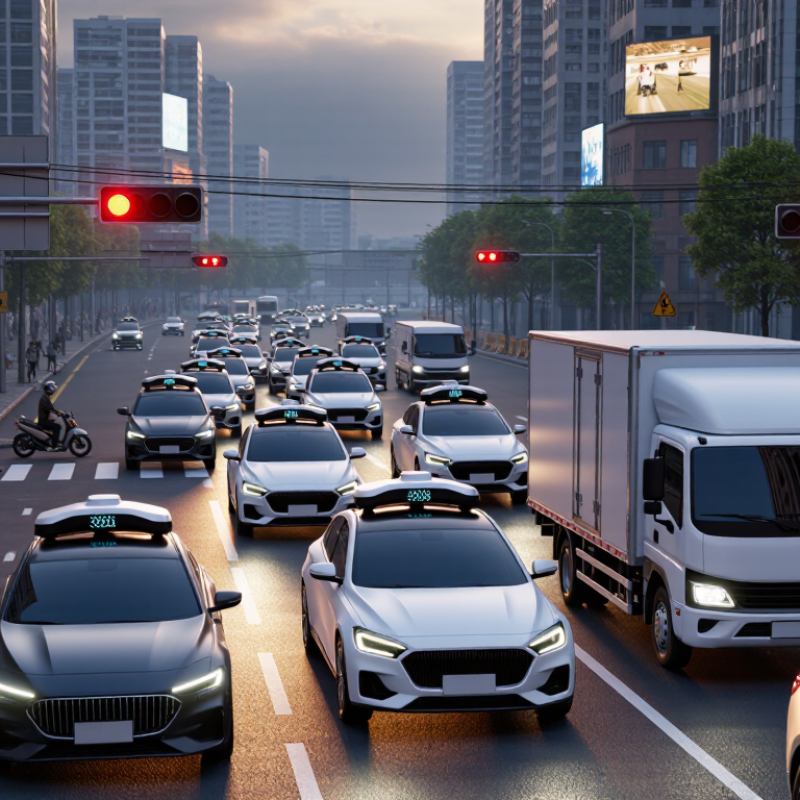
China’s autonomous driving sector covers more than robotaxis. It includes sensing hardware, computing platforms, mapping, vehicle control, data services, and safety validation. China’s national standard GB/T 40429-2021 divides driving automation into Levels 0 to 5. Levels 2 and below still require an attentive human driver. Higher levels require stronger operational limits, redundancy, and legal approval.
The market is already moving beyond experiments. The China Association of Automobile Manufacturers reported that Level 2 assisted-driving functions appeared in 47.3% of newly sold passenger vehicles in 2023. This figure measures installed functions, not fully autonomous journeys. That distinction matters. A supplier may provide cameras and algorithms, yet remain far from dependable urban autonomy. Real performance depends on rain, construction zones, motorcycles, and poorly marked roads.
The China Academy of Information and Communications Technology identifies intelligent connected vehicles as a major part of China’s digital transport development. Its industry reports emphasize cloud coordination, vehicle-road communication, cybersecurity, and testing frameworks. Suitable suppliers should therefore demonstrate repeatable safety data, transparent system boundaries, and long-term software maintenance. Hardware cost is relevant, but it is not the whole answer. Some evaluation methods still rely too heavily on closed test tracks. Real roads are less polite. Any serious comparison should examine disengagement records, update controls, sensor redundancy, and compliance evidence, rather than promotional claims alone.
China’s autonomous driving supplier ecosystem is organized less like a single chain and more like a layered engineering network. At the base, specialized firms develop cameras, radar, lidar, positioning units, and vehicle control hardware. Other suppliers provide chips, operating systems, simulation tools, and data platforms. Each layer has a distinct role, yet boundaries often overlap. This creates speed, but also integration pressure.
Vehicle manufacturers usually coordinate these layers through technical standards and shared testing schedules. Tier-one integrators combine perception, planning, and actuation into a production-ready system. Software specialists refine algorithms with road data, while mapping and cloud providers support updates and fleet monitoring. Test centers reproduce rain, tunnels, night traffic, and sudden obstacles. Small details matter, including sensor heating, connector strength, and recovery after a failed signal. Reliability comes from repeated drives, not polished demonstrations.
The ecosystem works better when suppliers expose interfaces and document limitations honestly. It becomes fragile when one component is treated as universally ready. That lesson is easy to miss. Calibration delays, inconsistent data labels, and changing regulations can slow deployment. Some suppliers still need stronger validation outside familiar cities and weather conditions. Independent audits, traceable test records, and careful human oversight improve confidence. A capable supplier should communicate faults early and keep supporting engineers after installation.
| Supplier Ecosystem Layer | Primary Products or Services | Typical Autonomy Scope | Main Vehicle Integration Point | Key Commercial Buyers | Current China Market Position |
|---|---|---|---|---|---|
| Vehicle and System Integrators | Complete vehicles, electronic/electrical architecture, safety validation, automated-driving feature integration | Level 1 to Level 2 widely deployed; Level 2+ and higher functions subject to feature, road, and regulatory limits | Vehicle platform, domain controller, braking, steering, power, and human-machine interface | Passenger-vehicle manufacturers, commercial-vehicle manufacturers, mobility operators | The principal route to mass production because the vehicle manufacturer remains responsible for system-level safety and compliance |
| Autonomous Driving Software Suppliers | Perception, sensor fusion, localization, prediction, planning, control, simulation, and data pipelines | Advanced driver assistance through conditional automation; higher automation is mainly concentrated in pilots and restricted operating domains | Automated-driving domain controller, central computing platform, vehicle operating system, and cloud services | Vehicle manufacturers, mobility operators, logistics companies, infrastructure operators | A strategic layer with strong demand for localized algorithms, Chinese-road training data, and software that can be adapted to domestic vehicle platforms |
| LiDAR and 3D Sensing Suppliers | Scanning LiDAR, solid-state LiDAR, point-cloud processing, calibration tools, and perception support software | Commonly used to enhance Level 2+ perception and to support robotaxi, shuttle, delivery, and mining pilots | Roof, windshield, grille, or bumper sensor locations; connection to the perception or central-computing domain | Vehicle manufacturers, autonomous-driving developers, robotics companies, mapping providers | A highly competitive domestic hardware segment, supported by local manufacturing capacity and increasing vehicle-level adoption |
| Radar and Ultrasonic Sensing Suppliers | Millimeter-wave radar, imaging radar, ultrasonic sensors, signal processing, and object-detection modules | Core sensing support for parking, collision warning, adaptive cruise control, lane functions, and automated emergency braking | Front, side, rear, and bumper modules connected to ADAS or vehicle domain controllers | Vehicle manufacturers, Tier 1 system suppliers, parking-system providers | A mature and cost-sensitive supply layer; radar and ultrasonic sensing remain important even when vehicles also use cameras and LiDAR |
| Camera and Imaging Suppliers | Automotive cameras, image sensors, lens assemblies, camera modules, and image-processing components | Essential for Level 1 and Level 2 functions, including lane keeping, traffic-sign recognition, and forward collision detection | Windshield, mirrors, pillars, rear view, and surround-view locations | Vehicle manufacturers, Tier 1 ADAS suppliers, parking and surround-view system providers | The highest-volume perception layer by vehicle count, although performance depends strongly on weather, lighting, calibration, and software quality |
| Automotive Computing and Semiconductor Suppliers | System-on-chip devices, AI accelerators, microcontrollers, memory, power management, and automotive-grade processors | Supports everything from basic ADAS to high-compute automated-driving systems | ADAS electronic control units, cockpit-domain controllers, central computers, and zonal architectures | Vehicle manufacturers, Tier 1 suppliers, computing-platform developers | A foundational layer where computing performance, functional safety, cybersecurity, supply continuity, and software compatibility determine platform selection |
| High-Precision Positioning and Mapping Suppliers | GNSS/INS systems, high-definition maps, lane-level positioning, localization services, and map-update platforms | Supports highway assistance, navigation, lane-level localization, robotaxi operations, and geofenced automation | Navigation unit, localization module, cloud platform, and automated-driving software stack | Vehicle manufacturers, mapping companies, logistics operators, robotaxi operators, smart-city projects | Important for constrained operating domains; deployment is shaped by national mapping, surveying, data-security, and geographic-information rules |
| Cloud, Data, Simulation, and Testing Suppliers | Data storage, annotation, model training, simulation, scenario generation, fleet monitoring, and validation tools | Supports the development and validation of all automation levels, especially complex Level 2+ and pilot systems | Cloud backend, development toolchain, vehicle data gateway, and safety-validation workflow | Vehicle manufacturers, software developers, testing organizations, mobility operators | A rapidly expanding enabling layer because automated-driving performance depends on large-scale data closed loops and repeatable testing |
| Vehicle Actuation and Safety-System Suppliers | Electronic braking, steering, chassis control, redundancy systems, safety controllers, and fail-operational components | Required for higher levels of driver assistance and essential for any system that must maintain controlled operation after a component fault | Brake-by-wire, steer-by-wire or electrically assisted steering, chassis domain, and safety gateway | Vehicle manufacturers, chassis-system suppliers, autonomous shuttle and commercial-vehicle developers | A safety-critical layer with long validation cycles, strict quality requirements, and significant influence on the feasible automation level |
| Smart-Road and Vehicle-to-Everything Suppliers | Roadside units, traffic sensors, edge computing, signal-priority systems, vehicle-to-infrastructure communication, and cloud coordination | Supports connected assistance, cooperative perception, traffic management, and restricted-area automated mobility | Roadside infrastructure, traffic-control center, vehicle communication unit, and mobility cloud | Municipal governments, transportation authorities, infrastructure contractors, vehicle and mobility operators | Project-based and region-specific; deployment is influenced by local government programs, infrastructure budgets, communication standards, and data governance |
| Autonomous Mobility and Robotics Operators | Robotaxi, autonomous shuttle, unmanned delivery, port, mining, warehouse, and sanitation solutions | Often Level 4 within a defined operational design domain, route, site, or service area | Purpose-built vehicle, remote-assistance center, fleet-management platform, and operating environment | Mobility platforms, logistics companies, industrial operators, airports, ports, campuses, and local authorities | The clearest path for higher automation because operations can be geofenced, monitored, and managed under defined conditions |
China’s best autonomous driving technology suppliers are easier to assess by category than by popularity. Sensor suppliers provide cameras, millimeter-wave radar, lidar, and ultrasonic systems. Their value depends on detection range, weather performance, calibration, and production consistency. The China Association of Automobile Manufacturers reported more than 30 million vehicle sales in 2023, creating a large testing and deployment base for these components.
Computing-platform suppliers form another major category. They deliver automotive processors, domain controllers, safety systems, and power-management solutions. According to a 2024 report from the China Academy of Information and Communications Technology, intelligent connected vehicles are moving toward centralized electronic architectures. This shift increases demand for stronger computing, lower latency, and secure software updates. However, higher computing power does not automatically create safer driving.
Software suppliers build perception, prediction, planning, control, and driver-monitoring functions. Other specialists focus on high-definition maps, positioning, simulation, vehicle-to-everything communication, and fleet data operations. A 2023 McKinsey analysis identified China as one of the largest markets for advanced driver-assistance adoption, supported by rapid vehicle electrification. Market figures can differ sharply, though. Definitions of assisted driving remain inconsistent, and some supplier claims still need independent road-testing evidence. Real performance may change under rain, construction zones, faded lane markings, or crowded urban intersections. That is the uncomfortable part.
Functional coverage across the autonomous driving technology stack
The chart maps major supplier categories to the number of core functions commonly covered in each technology layer. It is a taxonomy-based view rather than a ranking of companies or a measure of market share. Core functions include sensing, localization, computing, perception, planning, vehicle control, simulation, and validation.
China Best Autonomous Driving Tech Suppliers?
Criteria for Evaluating the Best Chinese Autonomous Driving Suppliers
Choosing China’s best autonomous driving technology suppliers requires more than comparing demos or sensor counts. A credible evaluation begins with evidence from test tracks, public roads, poor weather, night driving, and dense urban traffic. Ask for measurable results, including disengagement rates, collision-avoidance performance, perception accuracy, system latency, and recovery behavior after sensor failure. A polished demonstration is useful. It is not enough. Require test conditions, sample sizes, software versions, and independent verification.
Engineering depth matters because autonomous systems combine hardware, software, mapping, simulation, and vehicle integration. Review how suppliers handle edge cases, cybersecurity, privacy protection, software updates, and human handover. Reliable suppliers explain limitations instead of promising flawless automation. Check documentation quality, safety processes, incident reporting, and compliance with applicable transportation requirements. Speak with deployment teams, not only sales representatives. Their maintenance records may reveal more than a presentation.
Commercial strength also includes supply continuity, technical support, training, and transparent pricing. A low initial quote can become expensive when calibration, cloud services, or roadside assistance are added. Assess whether local teams can diagnose faults quickly and deliver replacement parts consistently. No evaluation is perfect. My own bias is worth noting: impressive automation can overshadow uncomfortable operational details. For that reason, use the same weighted criteria for every supplier, then revisit the scores after field trials.
China’s autonomous driving market is shifting from demonstrations to daily transport. The China Association of Automobile Manufacturers reported 12.87 million new-energy vehicles sold in 2024, representing 40.9% of total vehicle sales. This expanding electronic vehicle base gives autonomy suppliers more software-ready platforms and frequent data feedback.
The trend is clear.
China’s Ministry of Industry and Information Technology reported that Level 2 assisted-driving functions had entered more than half of new passenger vehicles by 2024. Meanwhile, the China Academy of Information and Communications Technology continues to emphasize vehicle-road-cloud coordination, especially for urban mobility and logistics. Strong suppliers now need dependable perception sensors, efficient computing, secure data systems, and rapid over-the-air updates. A vehicle must recognize a cyclist beside a wet intersection, not only perform well on a clear test route.
Data quality remains uneven. Reports from CAICT, market researchers, and automakers often use different definitions for “autonomous driving” and “intelligent driving.” That weakens direct comparisons. KPMG’s 2024 Global Automotive Executive Survey also showed stronger consumer acceptance of autonomous mobility in China than in many mature markets, but willingness does not equal trust during fog, construction, or unclear road markings. Procurement teams should examine disengagement records, safety validation, local-road coverage, update controls, and supplier response times. The best technology may still fail when maintenance is slow or training data misses ordinary streets.
It includes sensors, computing platforms, mapping, vehicle control, data services, and safety validation. Robotaxis are only one part.
The levels describe driving automation capabilities. Levels 2 and below still require an attentive human driver.
No. Level 2 functions assist with driving, but the human must monitor the road continuously.
They appeared in 47.3% of newly sold passenger vehicles. This measured installed functions, not autonomous journeys.
Rain, construction zones, motorcycles, tunnels, night traffic, and poorly marked roads can expose weaknesses.
It works as a layered engineering network. Different suppliers provide sensors, chips, software, maps, testing, and data services.
Review disengagement records, sensor redundancy, update controls, safety data, compliance evidence, and long-term maintenance.
Test tracks are controlled and predictable. Real roads are messier. Performance may change after rain or a failed signal.
Dependability comes from repeated road testing, clear system limits, traceable records, and honest fault reporting.
Some suppliers need broader validation across cities and weather. Calibration delays and inconsistent data labels remain practical concerns.
China’s autonomous driving technology sector covers a broad range of capabilities, from intelligent driver assistance and vehicle perception to decision-making, automated control, high-definition mapping, simulation, and vehicle-to-infrastructure communication. Its supplier ecosystem is organized across software developers, sensor and computing providers, system integrators, testing platforms, and infrastructure technology companies. Together, these participants support vehicle manufacturers and mobility operators at different levels of automation and deployment.
The best Chinese autonomous driving technology suppliers can be evaluated by their technical reliability, safety validation, scalability, data-processing capabilities, hardware-software integration, cost efficiency, and ability to meet changing regulatory and market requirements. Major market trends include faster development of advanced chips and sensors, wider use of artificial intelligence, stronger cooperation between vehicles and smart infrastructure, and growing attention to cybersecurity and functional safety. Advancements In Autonomous Driving Tech are also encouraging more adaptable solutions for urban transportation, logistics, and other carefully managed mobility scenarios.
