Almax Auto Almax Auto

What Are the Best Voice Command Features in Cars from China?

Time:2026-10-10 Author:Mason
0%

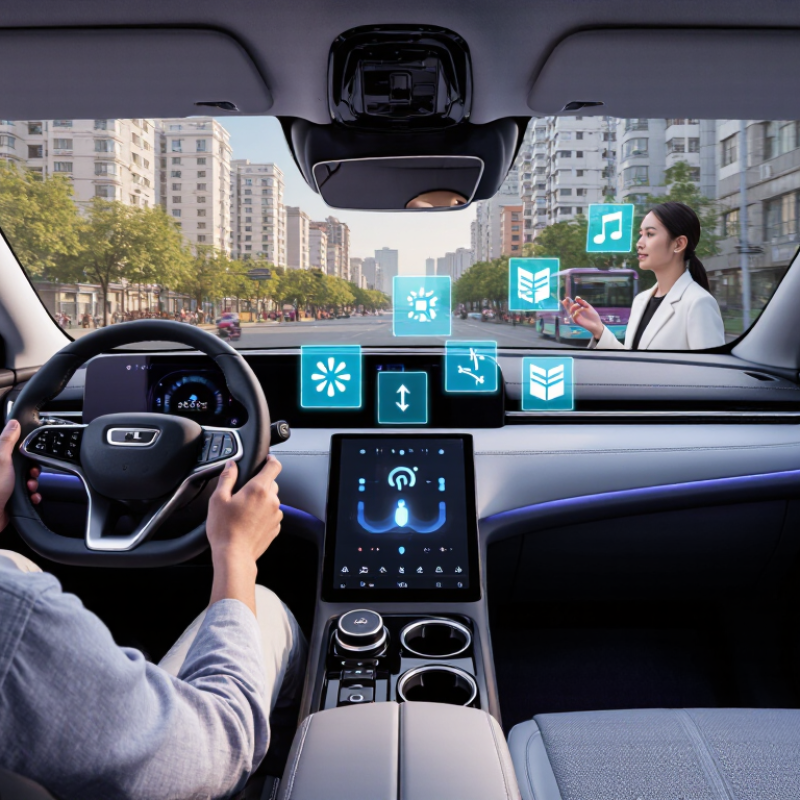
Voice Command Features In Cars are becoming a defining part of China’s intelligent vehicle experience. Drivers can say “open the window,” adjust cabin temperature, choose navigation routes, or control music without touching a screen. In a crowded Chinese city, this matters: a driver may keep both hands steady while passing scooters, buses, and narrow parking lanes. Yet convenience alone is not enough. A voice system must understand accents, background noise, interrupted commands, and changing passenger requests.

Industry research supports this shift. Deloitte’s 2024 Global Automotive Consumer Study shows that Chinese consumers remain highly receptive to connected services, digital features, and new-energy vehicle technology. McKinsey’s China automotive consumer research also highlights the growing importance of intelligent cockpits and software-based differentiation. Meanwhile, J.D. Power’s China vehicle studies consistently connect cockpit usability and technology satisfaction with the broader ownership experience. These findings suggest that voice control is no longer a decorative feature. It is becoming part of how buyers judge vehicle intelligence.

The best systems, however, are not always the loudest or most theatrical. They should respond quickly, recognize natural phrases, support multi-command interactions, and work across navigation, climate, seats, windows, and media. Some Chinese brands already offer wake-word-free interaction and voice localization for different occupants. That sounds impressive. Still, laboratory demonstrations can hide real frustrations, including false activations and misunderstood regional speech. This article compares the strongest Voice Command Features In Cars from China through practical usability, response accuracy, language flexibility, privacy awareness, and everyday reliability. The ranking may not be perfect, because software changes faster than published vehicle reviews. That limitation deserves attention.

What Are the Best Voice Command Features in Cars from China?

Core Voice Command Functions in Chinese Cars

Voice command systems in Chinese cars now handle more than simple calls and music changes. In daily driving, the most useful function is natural-language navigation. Drivers can say, “Find a quiet restaurant near the next charging station,” without memorizing fixed commands. The system can also adjust routes when traffic changes. This reduces screen interaction and keeps attention on the road.

Climate control is another core feature. A driver may request, “Make the rear seats cooler,” or “Reduce the airflow near my face.” Many systems recognize Mandarin tones and several regional accents, though performance can vary inside a noisy cabin. They may control windows, seat heating, lighting, driving modes, and air purification. Some even answer follow-up questions without repeating the wake phrase. It feels natural.

Entertainment commands are practical but less important. Users can select radio channels, search podcasts, change volume, or play music by mood. Voice assistants may also read messages aloud and help create replies. However, drivers should confirm sensitive information before sending it. Recognition is not perfect. A similar-sounding place name can produce the wrong destination, especially with weak network coverage.

Reliable systems should provide clear feedback on the screen and through audio. Local processing can improve response speed and protect certain voice data, but privacy settings still deserve careful review. From hands-on use, short commands work best, while long instructions sometimes confuse the assistant. Better software updates may solve this, yet drivers should never depend on voice control alone for safety-critical decisions.

Core Voice Command Functions in Chinese Cars

The chart groups common voice-command examples found in Chinese intelligent vehicle systems. Climate control and navigation usually provide the broadest command coverage, while communication, media, windows, seats, and vehicle settings are also commonly supported.

How Drivers Activate and Use Voice Controls

In many newer cars from China, voice control begins with a wake phrase or a button on the steering wheel. Drivers can say, “Open the sunroof,” “Set the cabin to 22 degrees,” or “Find a nearby charging station.” The system usually answers through the speakers and shows confirmation on the central display. This reduces screen tapping, especially during heavy traffic. From my experience, speaking naturally works better than using rigid command words.

Voice assistants can also control navigation, calls, music, windows, and seat heating. A driver might say, “Take me home,” then add, “Avoid toll roads.” Some systems understand follow-up requests without repeating the wake phrase. That feels smooth. However, recognition can weaken with road noise, strong accents, or several passengers speaking together. Short commands are more reliable. “Lower the rear temperature” is clearer than a long explanation.

Good systems allow drivers to interrupt, correct, or cancel an action. They may ask for confirmation before changing important vehicle settings. Drivers should still watch the road and use physical controls when voice recognition fails. I have found that unfamiliar commands may produce unexpected results, so checking the display matters. Privacy settings also deserve attention, since voice features can process spoken requests and driving-related data. Availability varies by vehicle configuration, software version, language, and region.

What Are the Best Voice Command Features in Cars from China?

How drivers activate and use voice controls in modern China-market passenger vehicles

Voice Feature How Drivers Activate It Typical Voice Command System Response Practical Benefit Availability
Wake-Word Activation Say the configured wake phrase, usually without pressing a physical button. “Hello, car.”
“Start voice control.”
The assistant listens for a follow-up request and provides an audible or visual confirmation. Allows hands-free access while driving. Common
Steering-Wheel Voice Button Press the dedicated microphone or voice-assistant button once. “Find the nearest charging station.” The microphone opens immediately, reducing the need for a wake word. Useful when road noise makes wake-word detection less reliable. Common
Navigation and Route Planning Use the wake word or steering-wheel button, then state a destination or request. “Navigate to the airport.”
“Avoid toll roads.”
The navigation system searches for the destination, proposes a route, and may begin guidance after confirmation. Reduces screen interaction and supports safer route changes. Common
Destination Search by Category Activate voice control and name a place type or service. “Find a nearby coffee shop.”
“Show rest areas along the route.”
Nearby points of interest are displayed and can be selected for navigation. Speeds up searches when the exact address is unknown. Common
Climate Control Use a wake word, voice button, or an in-car conversational command. “Set the temperature to 22 degrees.”
“Turn on the front defroster.”
The vehicle adjusts temperature, fan speed, airflow direction, seat heating, or ventilation when supported. Controls comfort functions without reaching for the center display. Common
Windows, Sunroof, and Seats Issue a direct command after activating the assistant. “Open the driver’s window halfway.”
“Turn on seat ventilation.”
The requested actuator responds, although some actions may require confirmation. Provides convenient control of frequently used cabin functions. Growing
Media and Audio Control Activate the assistant and mention content, source, or volume. “Play my saved music.”
“Lower the volume to 30 percent.”
The system starts, pauses, skips, searches, or adjusts audio output. Keeps the driver’s hands on the wheel during media changes. Common
Phone Calls and Contacts Use the wake word or steering-wheel button after pairing a mobile phone. “Call Alex.”
“Read my latest message.”
The system places a call or reads supported messages through the vehicle speakers. Supports communication without manually handling a phone. Common
Multi-Turn Conversation Ask a follow-up question without repeating the wake word immediately. “Find a restaurant nearby.”
“Show only places open now.”
The assistant retains short-term context and refines the previous request. Makes searches more natural and reduces repetitive commands. Growing
Natural-Language Vehicle Control Use ordinary conversational phrasing rather than a fixed command. “I’m cold.”
“The cabin is too bright.”
The system may increase cabin temperature, adjust airflow, or operate supported shades and lighting. Improves ease of use for drivers unfamiliar with command syntax. Growing
Passenger-Zone Recognition A passenger speaks toward the cabin microphone without using a separate control. “Open the rear window.”
“Set my seat temperature.”
Microphone processing attempts to identify the speaking zone and applies the command to the relevant area. Enables more precise control in multi-seat cabins. Growing
Vehicle Status Questions Ask a question after activating the voice assistant. “What is the battery percentage?”
“How much range is left?”
The system announces or displays information about range, doors, tire pressure, or maintenance when supported. Provides quick access to important vehicle information. Common
Charging Assistance Ask for charging information or a route to a suitable charging location. “Find a fast charger on my route.”
“Show charging stations with available connectors.”
The navigation system filters charging locations using available map and vehicle data. Helps electric-vehicle drivers plan longer journeys. Common
Offline or Limited-Connectivity Commands Use the wake word or physical voice button when mobile data is weak or unavailable. “Open the windows.”
“Turn on the headlights.”
Basic local commands may work without cloud connectivity, while online searches may fail or be limited. Maintains essential control in tunnels, rural areas, and poor-signal zones. Conditional
Safety Confirmation for Sensitive Actions Give a voice command and confirm it when prompted. “Open all windows.”
“Start a navigation route.”
The system asks for confirmation or restricts the action while the vehicle is moving. Reduces accidental activation of potentially distracting or safety-sensitive functions. Common

Availability varies by vehicle configuration, software version, language support, connectivity, and local regulations. The table describes common capabilities found across modern China-market vehicles without identifying any specific company or brand.

Smart Control of Navigation, Climate, and Entertainment

In cars developed in China, voice commands increasingly connect navigation, climate, and entertainment. A driver can say, “Find a fast charger near the next exit,” without touching the screen. The system should also adjust temperature, fan speed, and seat heating through natural speech. For entertainment, users can request a playlist, podcast, or radio channel while keeping both hands on the wheel. However, accents, road noise, and mixed-language commands still create mistakes. It is not magic.

J.D. Power’s 2024 China Initial Quality Study recorded 123 problems per 100 vehicles overall. Smart-cockpit functions remained among the areas needing improvement. This data matters because a voice system is useful only when it responds consistently. During a proper evaluation, test commands in tunnels, traffic, and with passengers speaking. Check whether navigation accepts corrections, climate controls confirm changes, and entertainment requests avoid unsafe screen interactions. A quiet demonstration can hide real weaknesses.

Tips: Use short, specific phrases. Say “lower the cabin temperature to 21 degrees” rather than “make it cooler.” Save common destinations before driving. Test the system with windows open and music playing. Review privacy settings, because voice recordings and driving habits may be stored. Also, keep physical controls available. Voice recognition can fail at the worst moment, and drivers should not spend several seconds repeating one command.

AI Conversation and Natural Language Understanding

AI conversation is becoming the defining voice feature in cars from China. Drivers can speak naturally, interrupt responses, and change requests mid-sentence. “Turn down the cabin temperature” can become “only on my side.” This feels closer to conversation than button pressing.

Deloitte’s 2024 Global Automotive Consumer Study reports strong Chinese consumer interest in connected services and advanced vehicle technology. Its findings also show that Chinese buyers place greater value on in-car connectivity than many Western-market respondents. That demand explains the rapid development of conversational interfaces. Natural language understanding lets drivers use regional expressions, incomplete sentences, and context. For example, “I’m tired” may trigger a rest-stop suggestion, while “make it quieter” can reduce media volume. Small details matter.

Voicebot.ai’s 2024 consumer report found that voice assistant usage remains widespread, but users still worry about recognition accuracy and privacy. The weakness is obvious. A system may understand a clear command, then fail when passengers speak together. In practical testing, background noise remains difficult. Accents can expose hidden gaps. Engineers increasingly combine microphones, cabin sound processing, and conversational memory to improve reliability. However, memory should remain limited and transparent. The system should confirm sensitive actions instead of guessing. Better dialogue is not always longer dialogue. Sometimes, “Did you mean the nearest charging station?” is the safest answer.

Privacy, Safety, and Future Voice Technology Trends

What Are the Best Voice Command Features in Cars from China?

The strongest voice systems respond to natural Mandarin, regional accents, and short, interrupted commands. Drivers can adjust temperature, open windows, select navigation points, or call a contact without touching a screen. Multi-zone microphones help separate the driver’s voice from rear-seat conversations. That detail matters in a noisy cabin. Voicebot.ai’s 2024 report counted about 145 million adult voice-assistant users in the United States. The figure shows how familiar this interface has become, although car use demands stricter reliability.

Privacy remains less visible than convenience. A responsible system should process routine commands locally and explain when cloud processing is required. It should also offer a physical mute control, clear recording indicators, and simple deletion options. IBM’s Cost of a Data Breach Report 2024 placed the global average breach cost at 4.88 million dollars. That figure is not an automotive prediction, but it exposes the financial weight of weak data controls. Cabin audio can reveal names, locations, habits, and private conversations.

Safety should outrank conversational charm. The World Health Organization estimates 1.19 million annual road deaths worldwide, making distraction reduction a serious design test. Good systems confirm uncertain destinations and reject risky multi-step requests while moving. Future assistants may learn preferences, understand context, and connect with home devices. That progress needs limits. I would not call every fluent answer intelligent. A confident mistake near a school crossing remains a failure. Voice technology from China is advancing quickly, but privacy settings and dependable fallback controls still need more attention.

FAQS

What voice commands can these cars understand?

Drivers can adjust temperature, open windows, choose navigation points, or call contacts without touching screens. Short commands work well.

Can drivers interrupt a voice response?

Yes. Drivers can change requests mid-sentence. “Cool the cabin” can become “only my side.” This feels more natural.

How does the system understand incomplete sentences?

It uses context and regional expressions. “I’m tired” might suggest a nearby rest stop. The suggestion may still be wrong.

Can voice systems recognize regional accents?

Many systems support regional accents and natural Mandarin. Clear speech usually helps. Passenger conversations and road noise remain difficult.

How do microphones improve voice control?

Multiple microphones can separate the driver’s voice from rear-seat speech. Cabin sound processing reduces noise from tires, fans, and music.

What privacy protections should a voice system provide?

Routine commands should be processed locally when possible. The car should show recording indicators, provide a mute control, and allow simple deletion.

Why does voice control affect driving safety?

Voice commands can reduce screen touching and visual distraction. However, uncertain destinations should be confirmed before action. Safety comes first.

What should happen when the system misunderstands a command?

It should ask a short clarification, such as, “Did you mean the nearest charging station?” Guessing sensitive actions is unsafe.

Will future assistants remember driver preferences?

They may remember temperature, navigation, or media preferences. Memory should remain limited and transparent. More memory is not always better.

Are fluent voice assistants always intelligent?

No. A confident mistake near a school crossing remains a serious failure. The technology is improving, but dependable fallback controls still matter.

Conclusion

Voice Command Features In Cars from China are designed to make driving more convenient, safer, and more connected. Drivers can activate voice controls through a dedicated button, a wake phrase, or hands-free prompts, then use natural language to request navigation, adjust climate settings, control music, make calls, or manage other vehicle functions. These systems aim to understand everyday speech rather than relying only on fixed commands, allowing drivers to speak more naturally while keeping their attention on the road.

Advanced systems also support AI conversation, contextual understanding, and personalized responses. They may recognize follow-up requests, interpret different ways of expressing the same intention, and provide helpful information during a journey. At the same time, privacy and safety remain important, with features such as permission controls, data protection, microphone indicators, and driver-focused interaction limits. Future developments are expected to improve language accuracy, personalization, offline performance, and integration with smart vehicle functions while maintaining responsible data use.

Mason

Mason

Mason is a seasoned marketing professional with a deep expertise in the company's offerings and a passion for driving brand awareness. With a strong background in digital marketing strategies, he has an innate ability to connect with diverse audiences and effectively communicate product benefits.......